




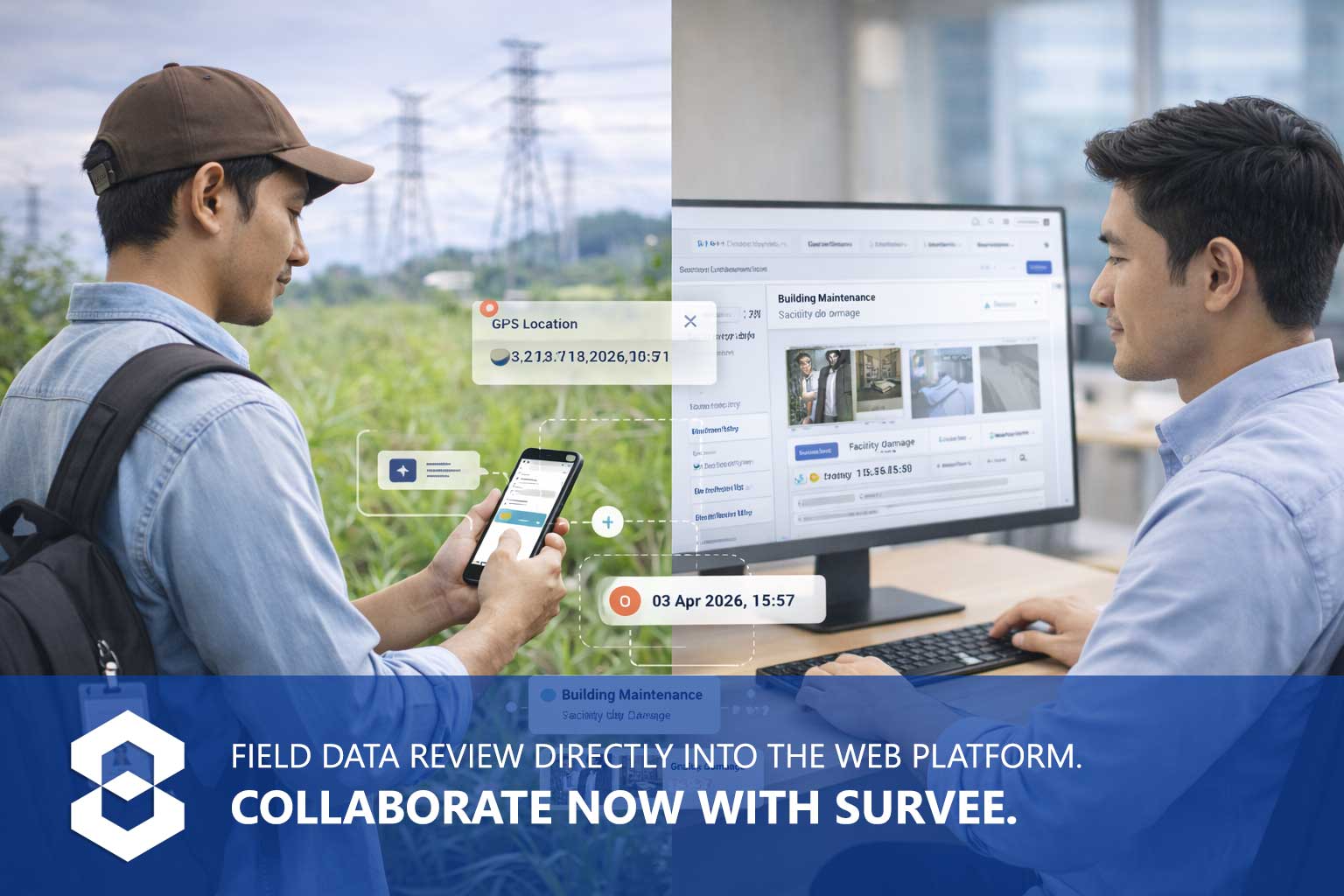
Survee is now structured so managers, supervisors, and executives can review what mobile teams capture without forcing everything into static reports.
Why this matters
Most field systems stop at capture. Survee is built so the same evidence can move from field activity into web review without losing context.
That means managers can scan updates, contributors can stay accountable to collections, and executives can review progress without waiting for manual recaps or secondary reporting layers.

Dashboard review starts with the activity itself
Each activity can carry media, notes, timestamps, GPS, and measurements. The web experience is designed to consume that same record, not rebuild it into another format later.
This is why the dashboard and activity feed are central to the Survee web product story: review should happen against the actual field record.
Who this is for
Supervisors need quick evidence review. Managers need collection-level visibility. Executives need operational signals without reading every field update. Survee’s web layer is intended to support all three without disconnecting them from the activity itself.

What changes operationally
When the same activity record can move from capture to review, teams spend less time producing recap documents and more time acting on the evidence. Comments, saving, and sharing stay attached to the record instead of drifting into side channels.
What comes next
The next public-site phase is to keep explaining Survee in operational terms: who captures, who reviews, how collections keep teams aligned, and how the web application turns field activity into an ongoing management surface.